

Build Custom
Web Applications
Design and build secure, browser-based enterprise applications aligned with modern architecture and Microsoft 365 platforms.
Not Every Application Should Be Modernised
Many Lotus Notes applications can be successfully modernised, preserving critical business logic while enabling modern access and integration.
However, some applications are no longer fit for purpose. They may be overly complex, poorly structured, difficult to maintain, or unable to support new business requirements.
In these cases, rebuilding is the safer and more effective long-term approach.
Choosing the Right Approach for Each Application
Migr8IT helps organisations determine the right path for each system:
This ensures investment is focused where it delivers the most value while avoiding unnecessary risk.
Practical guidance on building apps that power your business.
Secure, Browser-Based Applications Built for Enterprise Use
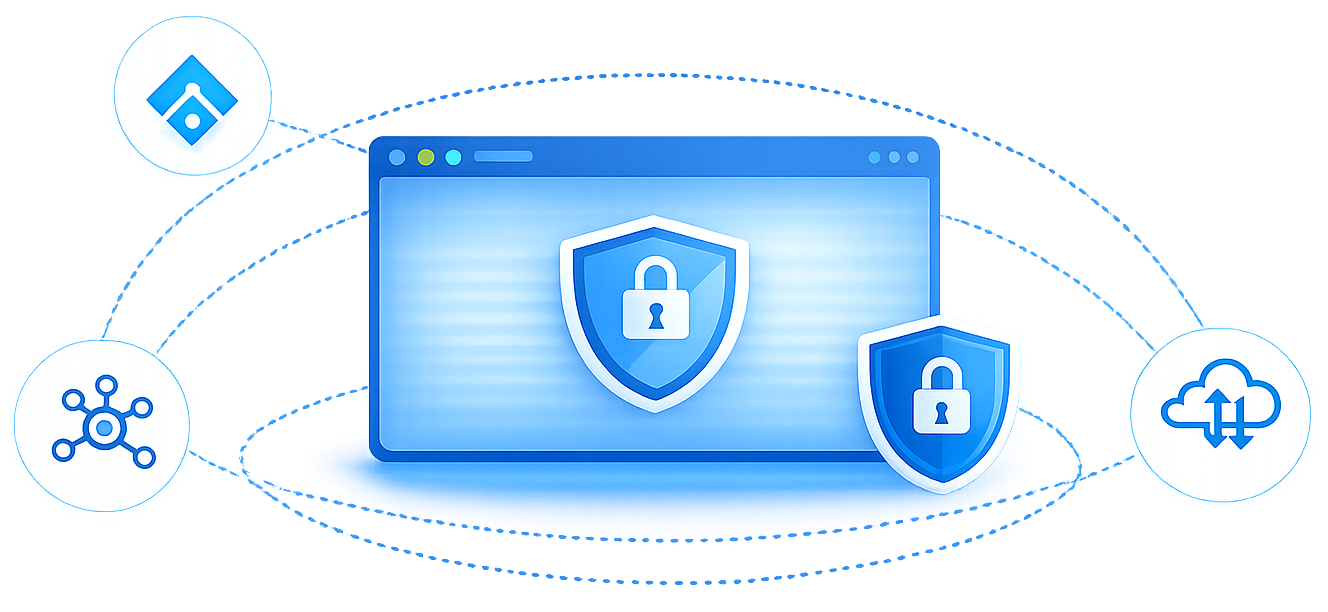
We design and build secure, browser-based business applications that:
Applications are built using widely adopted web technologies, ensuring long-term maintainability and supportability.
Built for Longevity, Not Short-Term Replacement
Our approach focuses on creating applications that are:
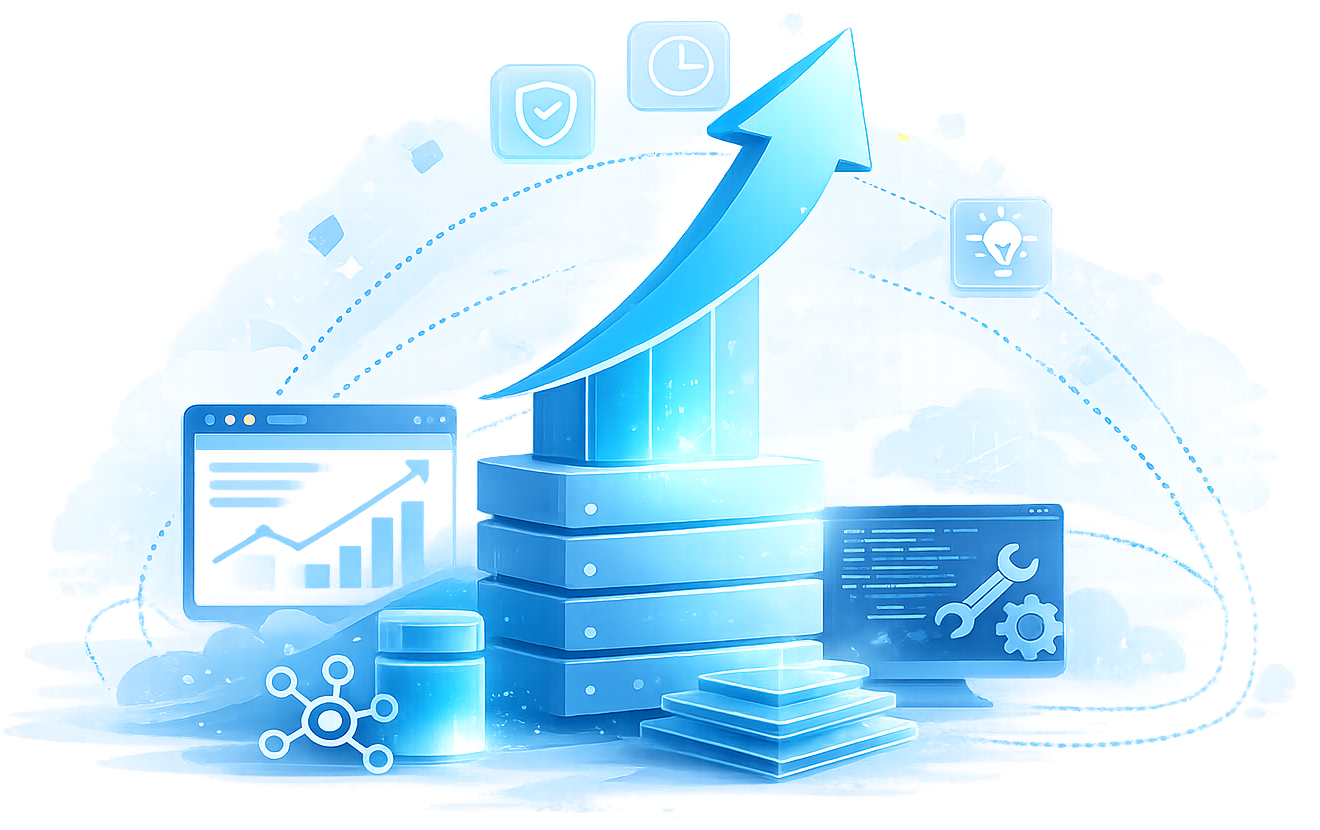
When Off-the-Shelf Systems Don’t Fit the Business
Many organisations adopt enterprise platforms such as Microsoft 365, Dynamics, or other SaaS solutions to standardise processes and reduce infrastructure overhead.
However, these platforms are designed for broad use cases. As business requirements become more specific, organisations often struggle to:
Over time, this can lead to increasing complexity, reduced efficiency, and growing reliance on expensive subscriptions that only partially meet business needs.
Built Around Your Business, Not the Other Way Around
Custom applications are designed to reflect how your business actually operates.
Rather than forcing processes into predefined structures, Migr8IT builds applications that:
This results in solutions that are simpler, more effective, and easier to evolve as business requirements change.
Use Standard Platforms Where They Work. Build Where They Don’t.
We take a pragmatic approach:
This ensures organisations avoid over-engineering solutions while retaining flexibility and control over critical business processes.
Custom Web Applications Built for Real Business Operations
Built for Long-Term Maintainability
Applications are built using widely adopted web technologies, avoiding niche frameworks and vendor lock-in while ensuring long-term maintainability.
Applications Designed Around Real Business Processes
Custom-built applications are designed around real business processes rather than forcing workflows into the constraints of off-the-shelf systems.
Enterprise Integration Ready
Applications integrate cleanly with Microsoft 365 identity and collaboration tools, enabling secure authentication, governance, and seamless adoption within existing enterprise platforms.
Lower Long-Term Technology Risk
By moving away from legacy platforms and spreadsheets, the organisation reduces dependency risk and gains systems that can evolve safely over time.
Flexible Cloud and On-Premise Deployment
Solutions can be delivered as cloud-hosted or self-hosted applications, allowing organisations to meet security, data residency, and regulatory requirements without compromise.
Secure Browser-Based Access Across Devices
Browser-based access across devices improves usability and availability, enabling faster adoption without retraining or disruption to established workflows.
Build Secure Business Applications That Fit Your Organisation.
Applications designed from the ground up using proven, supportable technologies. Secure, scalable, and built around how your organisation actually works.
Custom Web Applications Frequently Asked Questions
Are these off-the-shelf products or fully custom solutions?
Are these off-the-shelf products or fully custom solutions?
Can applications be cloud-hosted or self-hosted?
Yes. Applications can be delivered as fully cloud-hosted or self-hosted solutions. The deployment model is chosen based on security, data residency, regulatory, and operational requirements, not convenience.
Do you support Software as a Service (SaaS) delivery?
Yes. Where appropriate, we provide SaaS-style delivery with managed hosting, updates, monitoring, and support. This reduces infrastructure management, patching effort, and operational overhead for internal IT teams.
How do applications integrate with Microsoft 365 and Entra ID?
Applications can integrate directly with Microsoft Entra ID for authentication and access control. This enables single sign-on, conditional access, and alignment with existing identity, security, and governance policies. Applications can also be embedded within Microsoft Teams and SharePoint where required.
How do you handle security and access control?
Security is designed in from the outset. We implement role-based access, least-privilege models, audit logging, and integration with enterprise identity platforms. Security requirements drive architecture decisions rather than being added as an afterthought.
Will these applications increase our support burden?
No. Browser-based delivery removes the need for thick clients, local installs, or specialist runtimes. Applications are built using mainstream web technologies that can be supported by standard development and operations teams, reducing long-term dependency on niche skills.
Can these applications replace legacy systems like Lotus Notes?
Yes, where appropriate. We can reproduce complex business logic, workflows, and integrations in modern platforms rather than oversimplifying or losing functionality. Replacement is driven by suitability, not ideology.
What happens if our requirements change over time?
Applications are designed to evolve. Clean architectures, standards-based technologies, and clear separation of logic allow enhancements without wholesale rebuilds or platform lock-in.
Who owns the solution and the code?
You do. The application is built for your organisation, not tied to a proprietary platform or vendor-controlled framework. This protects long-term flexibility and investment.
How are these applications easier to support long term?
Applications are built using well-established, standards-based web technologies rather than niche frameworks or proprietary runtimes. This means they can be supported by mainstream development and operations teams without reliance on scarce or specialist skills.
Do these applications require specialist client software?
No. All applications are browser-based and accessed through standard modern web browsers. There are no thick clients, local installs, or specialist runtime dependencies to deploy or maintain.
Can our internal teams support these applications?
Yes. Solutions are designed so internal teams can support, enhance, and operate them using common web development, infrastructure, and security practices. We avoid creating systems that only the original vendor can maintain.
How does this reduce operational risk?
By using proven, well-understood technologies, organisations avoid single-person dependencies and reduce the risk associated with staff turnover, vendor exit, or skill scarcity.