
Enterprise Domino Data Migration
Secure, structured migration of complex Domino data with full integrity and traceability.
Migrating Lotus Notes data is not just about moving documents.
Data structures, embedded metadata, attachments, and application logic are often tightly coupled and poorly understood. When handled incorrectly, critical relationships are lost, rendering migrated data incomplete or unusable.
We extract and reconstruct complex Notes data into open, structured formats, preserving the integrity of documents, metadata, and relationships so it remains usable in modern platforms and architectures.
Delivering complete, reliable access to legacy data without dependency on Lotus Notes applications or infrastructure.
Get specialist guidance on extracting complex Lotus Notes data structures safely and preparing legacy data for modern platforms.
Preserve Data Integrity, Not Just Data
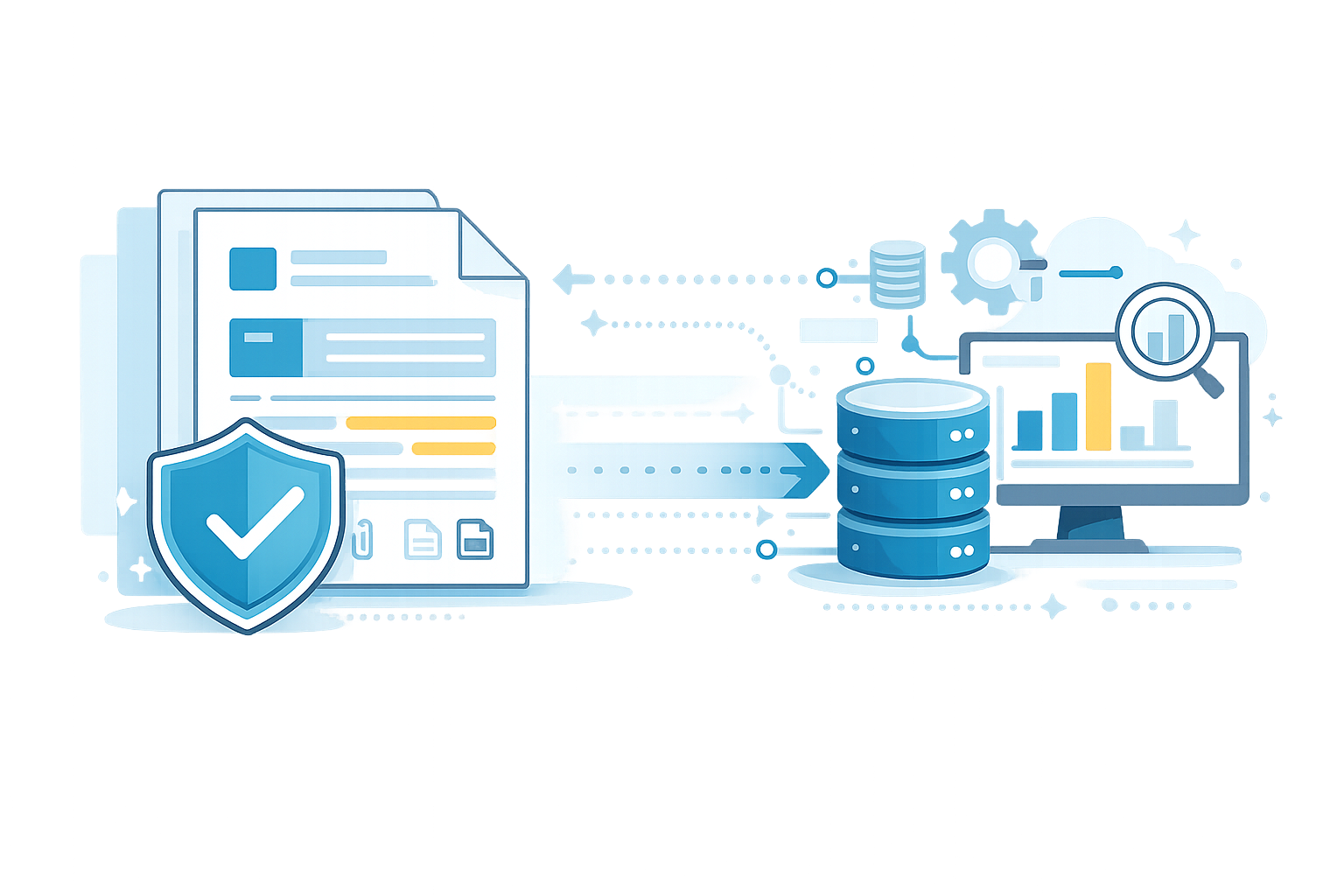
Lotus Notes data is rarely simple.
Document structures, embedded content, attachments, and relationships between records are tightly coupled and often undocumented. When extraction is handled incorrectly, these relationships are lost, leaving data incomplete, disconnected, and difficult to use.
Our extraction approach reconstructs underlying data structures, preserving the integrity of documents, metadata, and associated content so that extracted data remains complete, usable, and reliable.
Enabling modernisation without compromising the accuracy, context, or usability of legacy data.
Turn Legacy Lotus Notes Data into a Strategic Asset
Once extracted and structured, Lotus Notes data can power analytics, modern platforms, and AI-driven insight across your organisation.
Legacy Lotus Notes environments often contain years of business-critical data that is difficult to access, analyse, or reuse.

Business Intelligence
Historical operational data often sits locked inside Notes databases, making it difficult to analyse trends, performance, or business activity.
Once structured, this data can feed modern reporting platforms such as Power BI, turning legacy application data into actionable insight.

Enterprise Platforms
Critical historical records are often lost or inaccessible when organisations move away from Notes.
Structured data can be integrated into modern platforms such as Microsoft 365 or Dynamics, ensuring legacy information remains usable within day-to-day operations.

Data Platforms
Notes data typically exists in isolation, disconnected from wider enterprise data strategies.
Once extracted and structured, it can be integrated into data lakes, warehouses, and enterprise data platforms, enabling cross-system analysis and long-term data value.

AI Knowledge Archives
Decades of institutional knowledge are often buried in Notes applications, accessible only to those who know where to look.
Structured archives can be made AI-searchable, enabling teams to surface knowledge instantly and reduce reliance on tribal expertise.
This is not just data migration. It is the recovery and reuse of business-critical information that would otherwise remain inaccessible.
Why Specialist-Led Domino Data Migration Delivers Better Outcomes
Governance and Audit Readiness
Preserves data structures, relationships, and provenance so extracted records remain suitable for compliance, regulatory review, and audit.
Reduced Migration Risk
Specialist Domino expertise combined with automated extraction tooling ensures complex Notes data structures are migrated safely and accurately.
Future-Proof Information Assets
Creates durable, structured data foundations that support analytics, re-platforming, archiving, and modern enterprise platforms.
Improved Data Accessibility
Legacy Notes data becomes accessible through modern tools, analytics platforms, and enterprise systems without maintaining Domino infrastructure.
Scalable Migration Capability
Handles large volumes of Notes documents, complex schemas, and high attachment counts reliably across enterprise environments.
Lower Long-Term Costs
Removes reliance on Domino infrastructure and specialist skills required to maintain legacy platforms for historical data access.
Securely Move Lotus Notes Data
Without Loss.
Auditable migration of Lotus Notes data designed for long-term access, compliance, and modern platforms.
Enterprise Domino Data Migration Frequently Asked Questions
Why is extracting accurate data from Lotus Notes difficult?
Lotus Notes data is rarely flat or standardised. Documents often contain computed fields, rich text, embedded objects, attachments, response hierarchies, access-controlled data, and logic that only resolves correctly at runtime. General migration tools and non-specialists frequently misinterpret this, leading to missing fields, broken relationships, or silently corrupted data.
How do you ensure data accuracy during migration?
We combine proprietary extraction tooling with deep Domino platform knowledge to interpret documents as the application does, not as a simple data store. Field values, document relationships, metadata, security context, and attachments are extracted deliberately and validated, not assumed. Accuracy is verified through reconciliation and specialist review, not just tool reports.
What makes your approach different from other providers?
Most providers focus on where the data is going. We focus first on understanding what the data actually is. Our specialists know how Notes applications generate, calculate, and secure data, which allows us to extract complete, correct datasets rather than best-effort exports.
Can the data be migrated into any target platform?
Yes. We extract data into open, structured formats designed to be consumed by any modern platform, including Microsoft 365, SharePoint, data warehouses, analytics platforms, archives, and custom applications. The data is not shaped around a single target system, avoiding future lock-in.
How do you handle complex or heavily customised applications?
Customisation is expected. We analyse application design, data models, and behaviour before extraction. This allows us to correctly handle computed values, response documents, embedded content, and non-obvious dependencies that generic tools typically miss.
What responsibility does the customer have during the migration?
Very little. We take ownership of the technical complexity, including analysis, extraction, validation, and delivery. Customers are not expected to understand Domino internals, define field mappings, or troubleshoot data anomalies. We provide clear outputs and evidence-based assurance.
How do you prove the data is complete and correct?
We perform structured validation, including document counts, attachment reconciliation, metadata checks, and sampling of complex records. Where required, we provide audit-ready evidence that the extracted data matches the source logically and structurally.
Does this reduce risk compared to a full application migration?
Yes. Extracting accurate data into open formats allows organisations to move forward without carrying application risk. Data can be reused, archived, analysed, or re-platformed independently, reducing dependency on ageing Domino infrastructure and scarce skills.
What happens after the data is extracted?
Once data is liberated, organisations can move at their own pace. This might include analytics, archiving, re-platforming, or retirement of the original applications. The key point is that the hardest problem, getting accurate data out, has already been solved.
What usually goes wrong with Lotus Notes data migrations?
They appear to succeed, but subtle inaccuracies only surface months later when reports are wrong, records are missing, or audits fail. Our approach is designed to prevent those failures by prioritising correctness over speed.