
AI Ready Domino Archive and Platform Retirement
Transform legacy Lotus Notes archives into searchable, governed knowledge repositories ready for enterprise search and AI-assisted discovery.

Why organisations are rethinking Lotus Notes archives
Many organisations retain large volumes of historical Lotus Notes data that must be preserved for compliance, regulatory, or operational reasons. Maintaining Domino environments purely for historical access, however, introduces cost, operational risk, and long-term platform dependency.
Migr8IT provides a structured approach for extracting, preserving, and modernising access to legacy Notes data. Organisations can safely retire Domino infrastructure while ensuring valuable institutional knowledge remains accessible and governed within modern enterprise platforms.
This approach transforms Notes archives into secure, searchable repositories that integrate with platforms such as Microsoft 365, enabling enterprise search and AI-assisted knowledge discovery across historical records.
Explore how Migr8IT can transform historical Lotus Notes archives into structured knowledge repositories ready for enterprise search and AI-assisted analysis.
Emerging AI Knowledge Capabilities
Successful proof-of-concept demonstrating AI access to legacy Lotus Notes knowledge, using Migr8IT's migration tooling and Microsoft 365 Copilot.
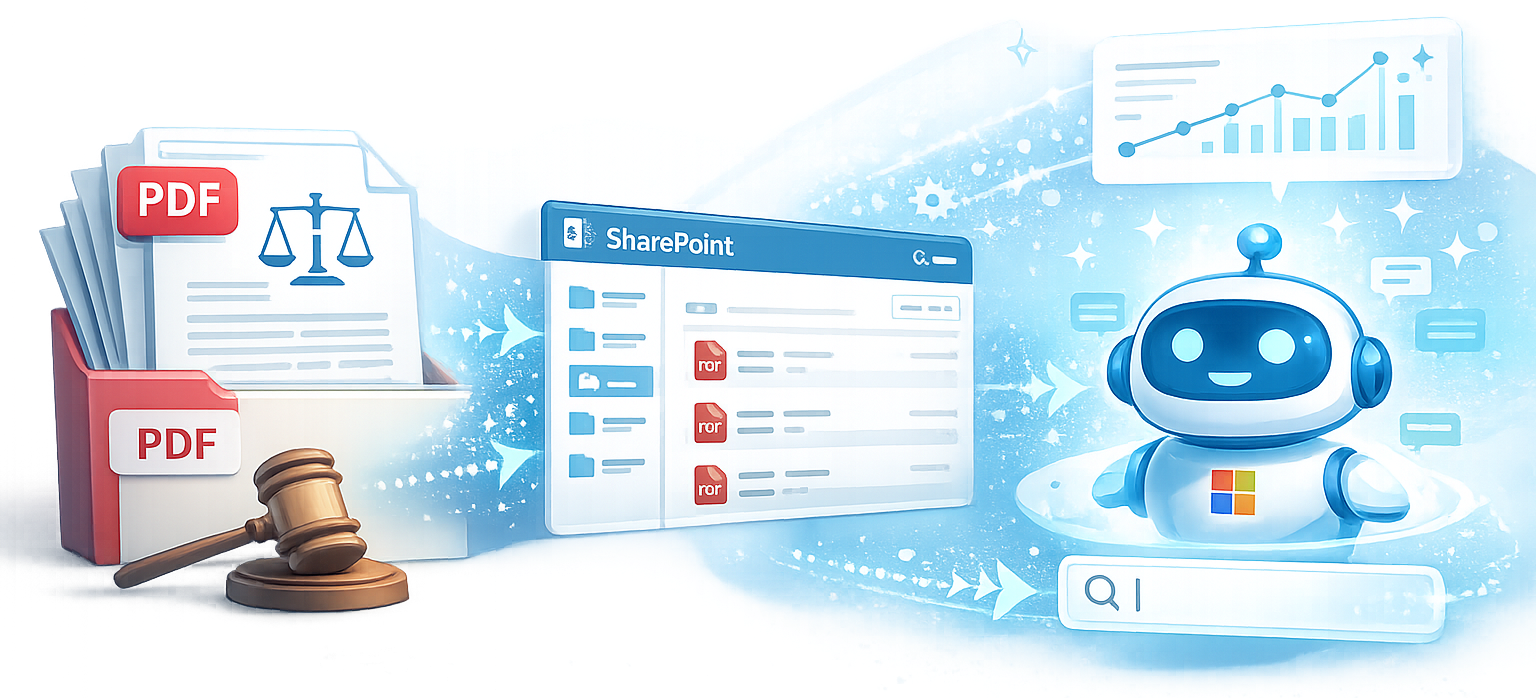
AI Search Across Legal Case Archives
The proof of concept used a large repository of historical legal documents stored within Lotus Notes databases.
Migr8IT migrated structured Notes records into SharePoint repositories, converting documents to PDF while preserving key metadata and organisational structure.
Once indexed within Microsoft 365, the archived content became accessible through AI assisted search. Users were able to query historical legal documents using natural language prompts and surface relevant records from across the archive.
This demonstrated how large volumes of legal and compliance documentation stored in legacy Notes environments can be transformed into modern knowledge repositories, enabling organisations to unlock valuable institutional knowledge that was previously difficult to access.
For organisations with significant legal, regulatory, or compliance archives, this approach provides a pathway to unlock knowledge stored across decades of legacy documentation.
Potential benefits for organisations include:
Migr8IT continues to develop practical approaches for transforming legacy Notes archives into modern, searchable knowledge repositories.
How the Approach Works
A structured process for transforming legacy Notes archives into searchable, AI-ready knowledge repositories.
Migr8IT analyses Notes applications and databases to understand data structures, document types, and metadata relationships. This discovery process identifies records requiring long-term preservation, compliance retention, or operational access.
By understanding the environment before extraction begins, organisations gain confidence that important data relationships and audit trails will be preserved during the archive process.
Documents, attachments, and metadata are extracted directly from NSF databases using structured extraction techniques that preserve document hierarchies, relationships, and key metadata fields.
Content is then transformed into structured digital records suitable for long-term storage and enterprise search while maintaining document context and traceability.
Extracted content is converted into durable archival formats such as PDF or structured document records depending on governance and regulatory requirements.
This ensures historical information remains preserved in stable formats suitable for long-term retention policies and regulatory review.
Converted records are migrated into modern enterprise platforms such as SharePoint, document management systems, or secure archive repositories.
Once migrated, organisations can apply governance controls including retention policies, access management, legal hold, and audit monitoring.
Once historical content has been structured and indexed, organisations can unlock significantly greater value from legacy information.
Modern search technologies and AI tools can analyse archived records, surface insights, and enable intelligent knowledge discovery across decades of previously inaccessible Notes data.
What AI-Ready Lotus Notes Archives Enable
AI Search Across Historical Legal Records
Archived documents become searchable using natural language queries across decades of organisational knowledge.
Preserved Context and Metadata
Original document structure, relationships, and key metadata are retained to ensure legal records remain meaningful and traceable.
Compliance-Ready Archives
Historical documentation is preserved in durable formats suitable for regulatory access, audit review, and long-term retention.
Accessible Organisational Knowledge
Previously buried Notes content becomes accessible to legal teams, compliance officers, and knowledge workers across the organisation.
Improved Research Efficiency
AI assisted search enables faster discovery of historical data.
Reduced Reliance on Legacy Platforms
Records remain fully accessible without maintaining ageing Domino environments.
Foundation for Enterprise AI Knowledge Systems
Structured legal archives create a foundation for future AI driven knowledge discovery and document intelligence initiatives.
Secure Enterprise Document Governance
Archived records benefit from modern access controls, retention policies, and audit capabilities within Microsoft 365.